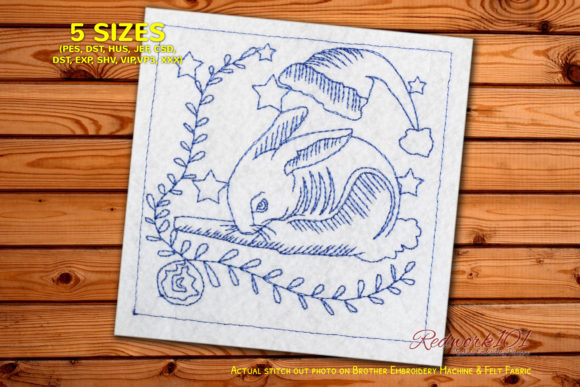
Cute Christmas Bunny Redwork: A Designer's Fair Review
As I prepare my booth for the upcoming weekend craft fair, my table is covered in prototypes. There are tote bags waiting for their final press, aprons hanging on the rack, and stacks of tea towels ready to be branded. In the middle of this creative chaos sits the Cute Christmas Bunny Redwork design. As an experienced embroidery designer, I do not just look at a file; I look at its potential to stop a customer in their tracks. This review breaks down exactly how this specific machine embroidery design performs in a real-world retail environment, focusing on what sells, what looks premium, and what is practical to produce in batches.
First Impressions and Market Appeal
The first thing that strikes me about the Cute Christmas Bunny Redwork is its simplicity. In a sea of overly complex, multi-colored designs that can sometimes look muddy from a distance, redwork stands out for its clean lines and bold contrast. The term "redwork" historically refers to embroidery done in a single color, usually red, on white or natural fabric. This aesthetic immediately signals a farmhouse, rustic, or vintage vibe, which is incredibly popular among handmade product buyers right now.
When I hold up a sample with this design, it feels festive without being cluttered. It avoids the "cartoonish" trap that some holiday designs fall into, opting instead for a charming, decorative look. For an Etsy seller or a boutique maker, this versatility is gold. It appeals to the customer looking for a subtle nod to the holidays rather than an overwhelming explosion of glitter and green. The visual appeal here is high because the eye knows exactly where to rest. There is no confusion, just a clear, cute image that communicates "holiday cheer" instantly.
Product Suitability and Display Strategy
Not every digital embroidery file works on every substrate. After evaluating the Cute Christmas Bunny Redwork, I have identified the best products for this specific artwork. The design shines brightest on flat, light-colored surfaces where the single-color stitching can pop.
- Tote Bags and Market Bags: This is arguably the strongest contender. A natural canvas tote with the bunny stitched in deep red thread creates a classic, reusable craft fair product. It photographs beautifully for online listings and looks expensive despite being simple to produce.
- Tea Towels and Aprons: Kitchen textiles are staples at holiday markets. The tea towel embroidery market loves redwork because it mimics traditional heirloom styles. An apron embroidery placement on the bib or pocket adds a touch of whimsy that encourages impulse buys.
- Pillow Covers: As a home decor item, a linen pillow cover with this design serves as a perfect seasonal accent. It allows customers to decorate for Christmas without committing to permanent changes in their home.
- Embroidered Patches: If you stitch this onto a twill backing, it becomes a versatile embroided patch that customers can iron onto jackets or hats later, expanding your product line without new inventory.
While caps and small pouches are options, one must be careful. Curved cap surfaces can distort simple lines if the digitizing isn't perfect, and very small pouches might crowd the design, losing its airy feel. For a small shop product, sticking to flat goods like towels and totes ensures the highest quality finished product.
Production Realities and Batch Efficiency
From a business owner's perspective, time is money. One of the greatest strengths of the Cute Christmas Bunny Redwork is its production speed. Because it utilizes a single thread color (or very few, depending on your customization), there is minimal thread trimming and color changing. This makes it ideal for batch production. I can hoop ten tea towels, run the machine, and move on to the next task while the embroidery head does the work.
The description notes that "The Box Stitch shown in picture is optional." This is a crucial detail for a professional. It means the design is modular. If I want a cleaner, more modern look, I skip the box. If I want a framed, traditional look, I include it. This flexibility allows me to create two distinct product lines from one embroidery file. Furthermore, the note stating "The color of outer Box is different color in most of the designs unless it is part of the design itself, you can skip the color direct" suggests that the digitizer has separated these elements intelligently. This gives me control over the thread colors without needing to edit the file in complex software.
Regarding photography, this design is a dream for creating printable mockups or taking booth photos. The high contrast between the red stitch and white fabric translates perfectly to camera lenses, making your Etsy listings stand out in search results. Clarity is key; customers scrolling quickly need to understand the image in a split second.
Technical Considerations and Careful Use
Despite its simplicity, there are technical factors to consider before running a full production batch. Redwork relies heavily on line quality. If the stitch density is too low, the lines may look gappy or weak, especially on textured fabrics. Conversely, if the density is too high on a lightweight fabric, it may cause puckering.
Here are my critical notes for using this design effectively:
- Fabric Texture: Avoid highly textured waffle weaves or looped towels for this specific design. The fine lines of a redwork bunny can get lost in the loops of a terry cloth towel. Stick to smooth linen, cotton duck, or tight-weave flour sack towels.
- Dark Fabric Warning: While red on white is classic, stitching red on dark navy or black fabric can sometimes lack contrast unless the thread has a high sheen or the digitizing includes a underlay that boosts the top thread. Always test on scrap fabric first.
- Stabilizer Selection: Even though it is a light design, do not skimp on stabilizer. A cut-away stabilizer is often safer for items like tote bags that will undergo stress, ensuring the design doesn't distort after washing.
- Hoop Size: Verify the required hoop size before purchasing. While likely small, ensuring it fits your smallest hoop can save setup time if you are doing multiple small items like patches or pockets.
- Licensing: Always confirm commercial licensing terms with the designer. Just because a file is digital does not automatically grant rights for commercial embroidery sales.
Final Verdict for the Handmade Entrepreneur
The Cute Christmas Bunny Redwork is a winner for the holiday season. It hits the sweet spot between trendy farmhouse aesthetics and timeless holiday tradition. For the handmade product seller, it offers a low-risk, high-reward opportunity. The production speed allows for healthy profit margins, and the visual clarity ensures strong buyer engagement at busy craft fairs.
By focusing on the right materials—crisp white linens and sturdy canvas—and paying attention to stitch quality, this design can become a signature piece in your holiday collection. It proves that you do not need thousands of stitches to make an impact; sometimes, a single, well-placed line of red thread is all it takes to capture a customer's heart. Before you start stitching, remember to create at least one real mockup to check the scale and thread contrast against your specific inventory. With those checks in place, this design is ready to help you close sales all December long.